
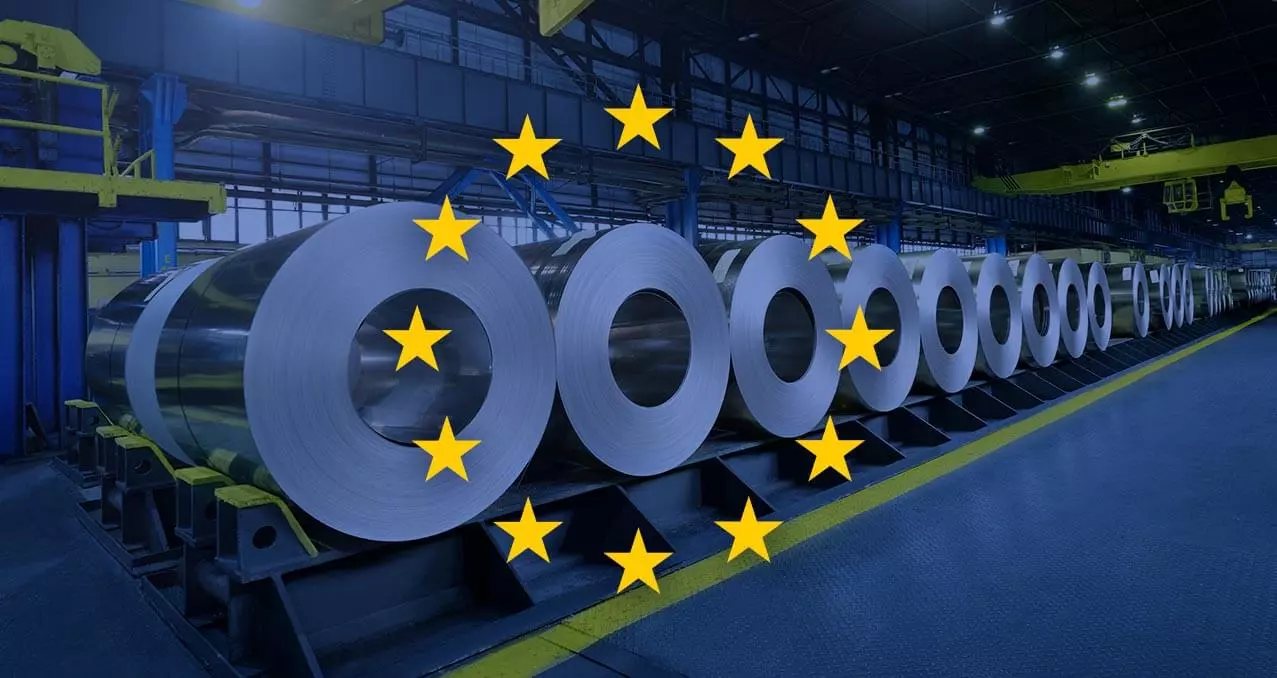
In the steel industry, the adoption of safeguard measures related to steel imports is a direct response to fluctuations in the global market and the dynamics of production overcapacity, especially in regions that export massively, such as China. Recently, the European Commission announced the extension of safeguard measures for steel imports until the end of June 2026, highlighting a continuous protectionist policy aimed at stabilizing the domestic market and protecting local producers.
A key aspect of this extension is the introduction of a 15% restriction on imports of hot-rolled coils and wire rod, applicable at the quarterly quota level for “other countries.” This restriction aims to balance the input of steel products from countries that are not the main traditional suppliers to the EU, thus limiting the negative impact of uncoordinated import flows and manifested overcapacity in certain regions.
An analysis of market developments preceding this decision shows a major discrepancy between the pace of tariff rate quota (TRQ) liberalization and consumption dynamics. While the TRQ was increased by approximately 25% since the implementation of the measures, including an additional 5% from February 2019, consumption saw a decline of 17% over the same period. This development suggests that the EU market has not efficiently absorbed the import increases, thus justifying the need for recalibrating the protection measures.
Furthermore, investigations by the European Commission have revealed significant changes in the structure of import flows, with a direct impact on the functioning of the safeguard measures. A reduction in exports from traditional suppliers and a marked increase in imports from new countries of origin were observed, necessitating a reassessment of import management strategies to maintain the effectiveness of the protection measures.
The pace of tariff liberalization will be reduced from 4% to 1% over the next two years, a measure that reflects the need for prudent adjustment to market realities. This represents an attempt to better align import capacity with current demand and market conditions, thus minimizing the adverse effects of global overproduction on the EU industry.
Regarding the “other countries” quota, there are five major sources of hot-rolled coil imports, of which only four exceeded the 15% threshold in Q1 2024: Japan (30%), Taiwan (25%), Vietnam (21%), and Egypt (17%). Limiting any supplier in this category to 15% is likely to lead to underutilization of the quota, however, it provides opportunities for increasing imports from less representative countries such as Indonesia.
This strategic recalibration is complemented by national initiatives, such as the experimental procedure introduced by Italy for managing open quotas, which allows for the refusal of import operations when they are exhausted. This approach reflects a growing trend towards stricter and more controlled rules in managing steel imports, highlighting concerns about the sustainability of production and consumption in a sector vital to the European economy.